Emergency Roof Tarping & Temporary Weatherproof Securement in Springfield, MO
Violent plateau microburst winds and severe convective storms tearing across Springfield, Nixa, and Republic can rip open architectural shingles and shatter structural plywood decking within seconds. Installing an engineered, heavy-duty emergency roof tarp is the critical first line of defense required by Missouri insurance carriers to mitigate secondary water loss, prevent saturated attic insulation, and stop progressive mold colonization before permanent restoration begins.
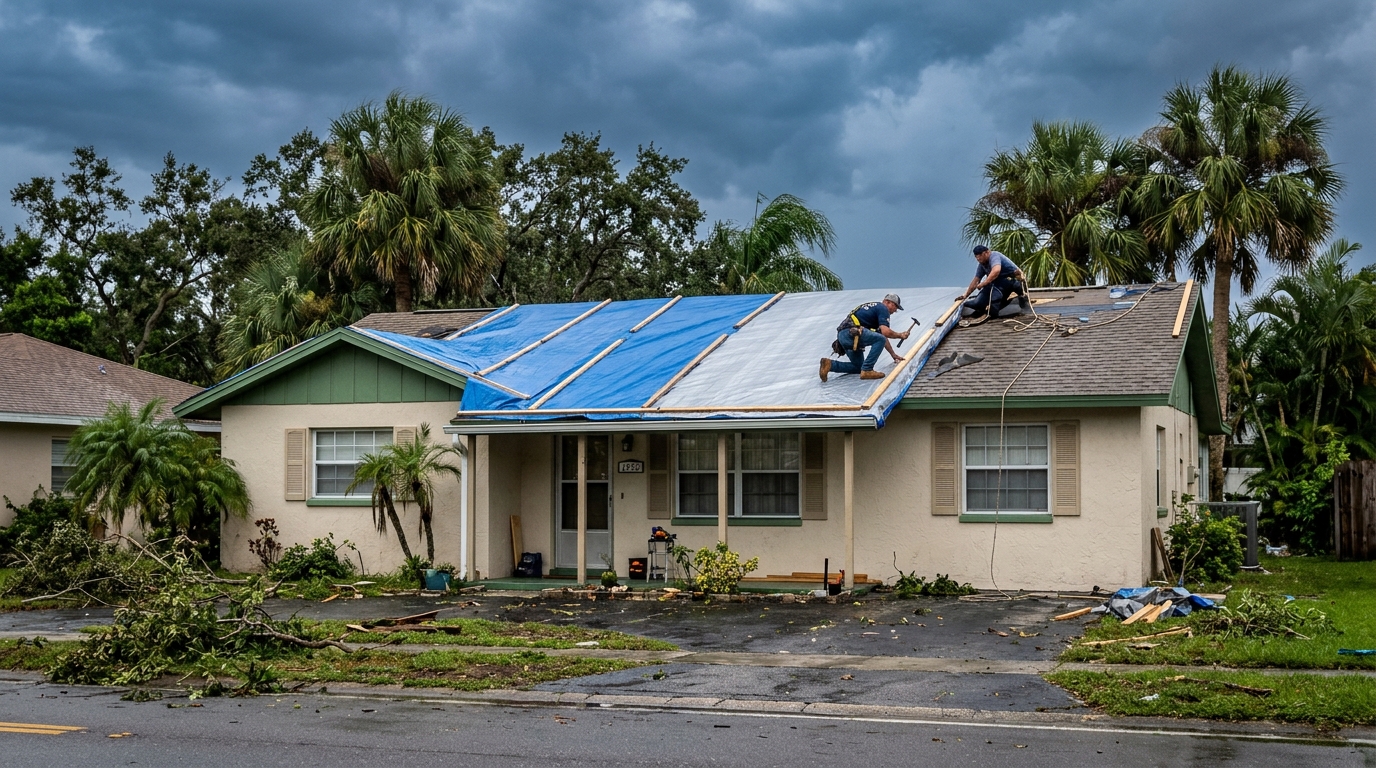
Key Technical Engineering Protocols • Emergency Roof Tarping
- Substrate Engineering: Specialized diagnostics calibrated for 10-Mil UV Polyethylene, Exterior Timber Battens & Gasketed Screws under heavy Ozark wind and hail loading.
- Rapid On-Site Mobilization: Direct telephone referral to vetted local contractors carrying heavy-duty 10-mil woven poly tarps and safety rigging.
- Non-Destructive Thermal Scopes: FLIR high-resolution radiometric moisture mapping to trace water entry back to source without invasive drywall tear-outs.
- Municipal Building Compliance: 100% adherence to City of Springfield, Greene County, and Christian County IRC/IBC high-wind fastening standards.
1. Regional Microclimate Dynamics & Severe Storm Exposure in Springfield, MO
The Springfield metropolitan area is situated in southwestern Missouri atop the Ozark Plateau, creating a distinct microclimate marked by intense atmospheric turbulence. As moist tropical air flows northward from the Gulf of Mexico, it encounters the elevated plateau terrain, triggering violent convective storm activity. This geographical setting places Greene and Christian counties directly within the high-frequency zone of American Hail Alley.
During severe spring and summer storm events, convective supercells generate straight-line microburst winds exceeding 75 to 85 miles per hour across Springfield, Nixa, Ozark, and Republic. Concurrently, rotating storm updrafts produce dense fields of large hail. As hailstones exceed 1.75 to 2.50 inches in diameter, the kinetic energy transferred upon roof impact easily fractures laminated shingle asphalt scrims, shatters ceramic tile, and indents metal flashings and siding panels.
In the winter months, sub-freezing temperatures freeze standing moisture in valleys, gutters, and low-slope roof transitions, creating thick ice dams. When warm indoor air leaks into under-insulated attics, meltwater backs up under cold shingles, soaking structural OSB or plywood roof decking.
2. Non-Destructive Moisture Diagnostics & FLIR Thermal Tracing
One of the primary hazards in post-storm roof inspection is misidentifying where water is actually penetrating the building envelope. Rainwater entering an eave, chimney flashing, or torn shingle course often travels fifteen to thirty feet laterally along ceiling joists, electrical conduits, or ductwork before dripping onto interior drywall ceilings. Rushing into invasive ceiling demolition causes unnecessary damage and inflated restoration costs.
Contractors dispatched through Roof Expert USA utilize calibrated FLIR infrared thermal imaging cameras and non-invasive moisture meters. Because wet insulation and saturated wood framing retain thermal energy longer than dry building materials during evening radiative cooling, infrared thermal cameras clearly reveal the precise moisture path and water intrusion boundaries without removing finished drywall.
Calibrated moisture meters with pinless RF sensors verify deep saturation levels within plywood decking and attic framing, establishing conclusive forensic evidence required by insurance adjusters to approve comprehensive roof mitigation scopes.
3. Step-by-Step Substrate Restoration Methodology & Engineering Controls
Permanent restoration requires strict adherence to manufacturer specifications and structural engineering principles:
- Structural Debris Removal & Safety Anchorage: Field crews establish OSHA-compliant fall protection rigging, remove hazardous tree limbs and punctured roofing sections, and inspect underlying rafters for structural deflection or fractures.
- Substrate Deck Replacement: Water-compromised CDX plywood or OSB sheathing is cut back to sound structural framing members and replaced with new exterior-grade sheathing fastened using 8d ring-shank nails at 6-inch perimeter and 12-inch field spacing.
- Ice & Water Self-Adhering Membrane Installation: High-temperature modified bitumen ice barrier membranes are installed along eaves, valleys, rakes, and around all vertical penetrations, creating a self-sealing waterproof gasket around all fastener penetrations.
- Master Flashing Integration: 26-gauge galvanized or pre-finished aluminum step flashings and valley liners are woven into each successive shingle course, ensuring unimpeded gravity drainage with zero reliance on vulnerable surface caulk beads.
- Wind-Resistant Shingle Fastening: High-wind fastening schedules (six nails per shingle tab driven into the manufacturer nail line) are strictly enforced to deliver certified 130 mph wind uplift resistance.
4. Missouri Energy Codes & Contractor Licensing Compliance
Roofing operations across Springfield and Greene/Christian counties must satisfy local building regulations enforced by the City of Springfield Department of Building Development Services. Work complies with the International Residential Code (IRC) and International Building Code (IBC) with specific local amendments regarding wind resistance, ventilation ratios, and ice barrier underlayments.
Under IRC Section R905, replacement roof systems must include continuous drip edge along eaves and rakes, balanced attic ventilation (1:150 ratio or 1:300 when balanced soffit and ridge vents are present), and Class A fire-rated assemblies. Furthermore, contractors dispatched through our network carry active municipal contractor licenses, comprehensive general liability coverage, and statutory workers' compensation insurance, protecting property owners from third-party liabilities during emergency operations.
5. Preventative Property Maintenance & Severe Storm Preparedness
Springfield property owners can significantly reduce the risk of catastrophic emergency leaks by instituting proactive semi-annual roof envelope maintenance:
- Overhanging Tree Canopy Trimming: Keep mature oak, walnut, and hickory tree branches pruned back a minimum of 8 to 10 feet from roof edges to eliminate wind friction abrasion and heavy deadfall puncture risks during summer supercells.
- Gutter & Downspout Debris Clearing: Clean gutters thoroughly in late spring after seed drop and in late autumn after leaf fall. Clogged gutters hold standing water that accelerates fascia board rot and generates massive winter ice dams.
- Attic Thermal Bypass Sealing: Seal air leaks around chimney chases, plumbing penetrations, and recessed lighting with fire-rated expanding foam. Preventing warm indoor air from leaking into the attic space keeps the roof deck cold, virtually eliminating ice dam formation along eaves.
- Annual Professional Visual Inspection: Have a certified local roofing technician conduct a pre-season roof assessment to verify sealant strip adhesion, inspect rubber pipe boot collars, and identify minor granule loss before a major storm strikes.
Need Immediate Emergency Roof Assistance in Springfield?
Zero web forms to fill out. Zero waiting for email replies. Connect directly with an on-call Ozarks emergency intake coordinator now: